By Trenety Vick-Herrera
When “King of The Hill” first hit screens in 1997, it did so without the ironic detachment that defined the works of its time. That was always the joke and the genius. In a landscape crowded with louder, quippier, shinier TV worlds, Mike Judge and Greg Daniels built something radical by staying ordinary. Now, nearly three decades later, the show returns to a country that’s become louder and stranger than the original show’s world ever depicted, and the question hanging over this revival is simple. Can a show about quiet dignity, propane and common sense still matter?
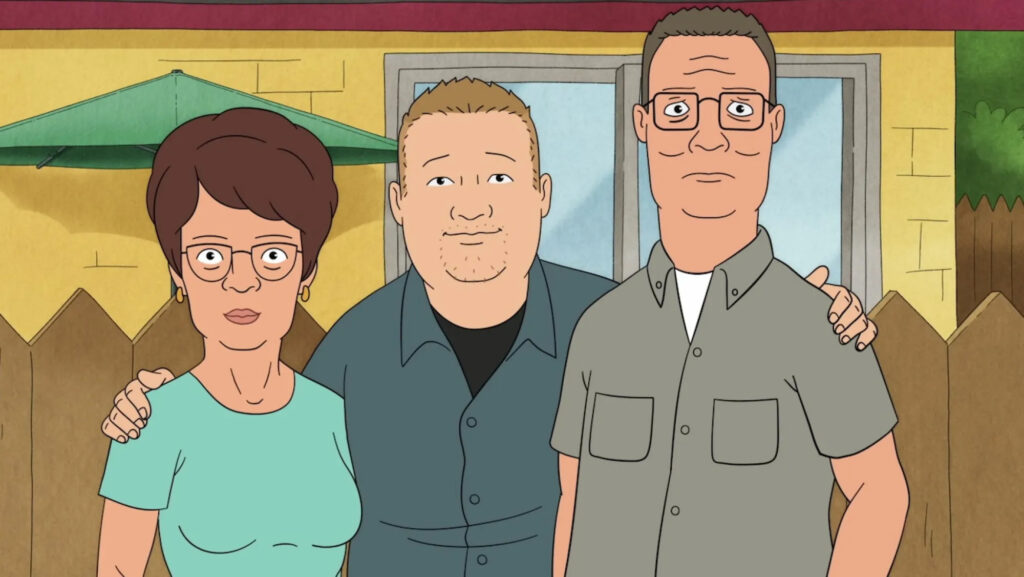
The new season doesn’t reinvent the world that surrounds Rainey Street. Instead, it picks up American life where the series left it—only this time, something feels different. Nostalgia has become a business model. Reboots crowd every corner of pop culture. But “King of the Hill” was never about chasing cultural winds. It was an anchor. The revival is not a grab for relevance, but is a sign that there is still room for a show that respects its characters more than its punchlines in our new TV era.
The fictional Dallas suburb of Arlen, Texas and its citizens got an update for a new era without turning the show into a parody of what it was in the late 1990s and mid-2000s. Instead of chasing after contemporary humor or Gen-Z trends, the series, refreshingly, maintains its original charm—warm, dry and snarky.
Hank Hill hasn’t changed much, but the world around him has. Propane customers demand carbon-neutral options. Neighbors argue about online conspiracy theories. Half the block owns electric trucks that Hank just can’t get behind. It is also hilarious to see the repulsion he faces when he’s invited to a men’s rights group trip that blames all of their problems on “females.” His new character arc is not so different. It stems from watching a simple Texan man of simple Texas values negotiate with a world that is changing faster than he can adapt.
Peggy has found a new outlet for her relentless and delusional confidence in online writing classes, where she insists she is an expert. One of the greatest moments in the show is when Hank is watching a rerun of Monsignor Martinez while Peggy acts as a real-time interpreter. Hank hesitantly stops her to point out that the show is subtitled and what she’s saying doesn’t make sense. Peggy goes on to claim the subtitles are wrong. She then leaves because she’s running late for a Pilates class where she’s got to show the teacher how to actually do Pilates.
Bobby, now the owner of a German-Texan-Japanese fusion hibachi restaurant called Robata Chane at the young age of 21, stumbles into mild internet fame after a cooking mishap becomes a meme. He lives with his roommate, Joseph Gribble, and we see his romance with Connie Souphanousinphone get rekindled. The revival shows Bobby as a confident, hard-working adult who has achieved his goals, and who faces the struggles of late-stage capitalism with his characteristic charm. Some viewers found the portrayal of an adult Bobby, especially in his romantic or sexual encounters, to be uncanny and lacking the innocence he maintained in the original series. But, as I remember it, Bobby was never an angel.
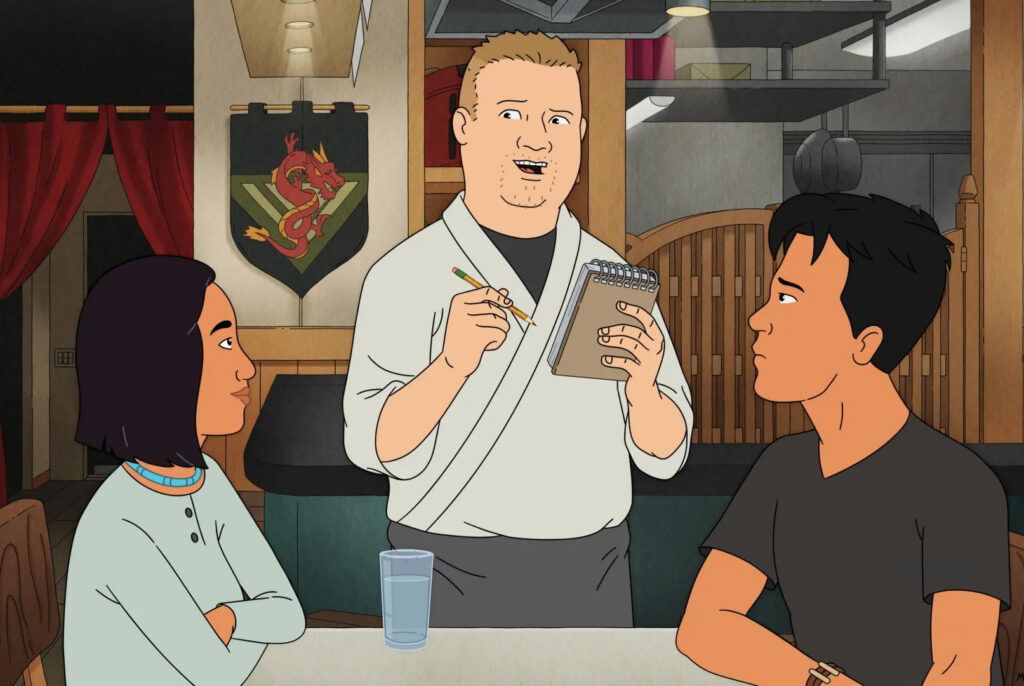
The revival doesn’t force the characters to modernize. They simply navigate and react to the modern world, as they did in the original series. A few episodes do wander some. One about a tech startup invading Strickland Propane feels a little gimmicky. Most of the episodes, however, settle comfortably into the series’ familiar mix of neighborly oddities and understated punchlines. The new animation style is sleek and digital, which some die-hard fans of the series may find to be somewhat jarring as they were used to the hand-drawn and watercolor techniques that were used in the original series.
No one asked for a revival. No one thought it was necessary. Most thought it was random. Many even dreaded the potential of ruining a decade-long masterpiece. But, truly, the characters remain refreshingly human, the setting is respected, and viewers can be truly thrilled by the lack of chaotic or off-the-wall situations. Too many reboots in the past few years have been louder, faster, and pushed the modern world into a gimmick. Judge and Daniels’ “King of the Hill” returns calmly and confidently, reminding the viewers that life still carries on the same on Rainey Street.